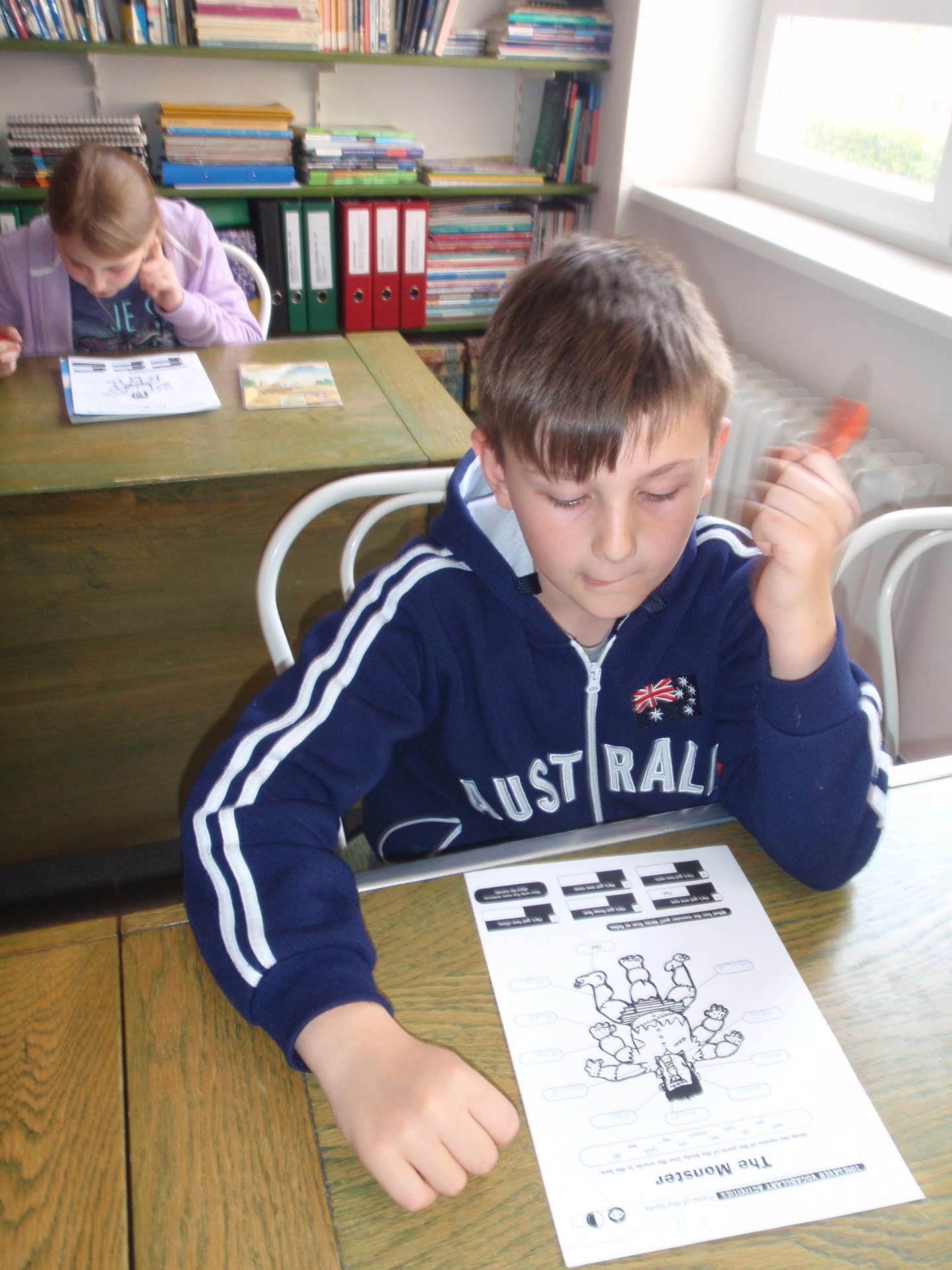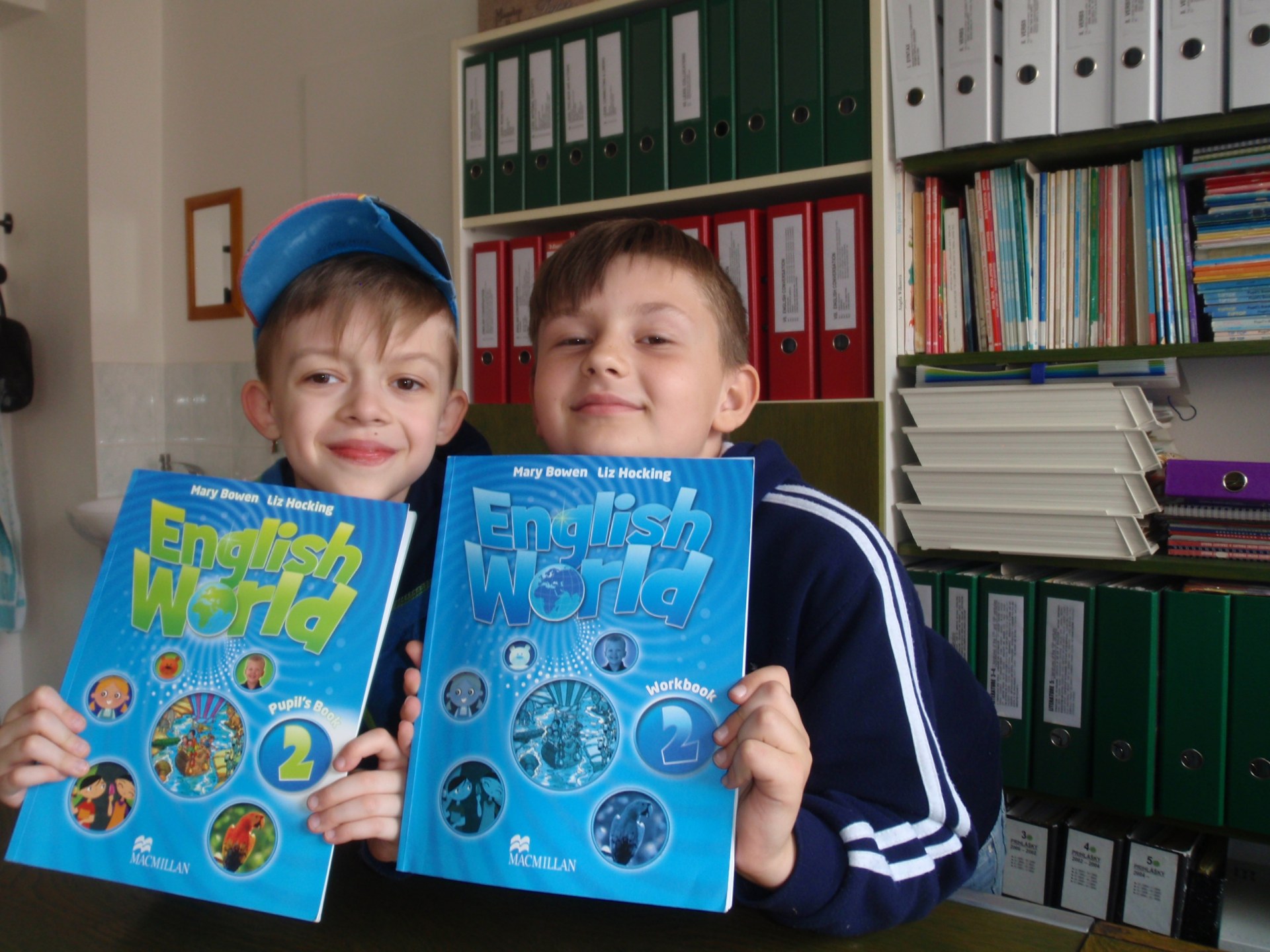

IVEGA Learning Centre – a small and specific English language school focused on a variety of age and interest groups that have a common goal: mastering the English language, one of the primary verbal international communication tools, and thereby raising the possibility of:
- Further educating themselves, studying and comparing information, reading literature directly from the sources and critically evaluating the material read without the necessity to have the content further interpreted, clarified, and possibly manipulated
- Confidently communicating at work and travelling in an English-speaking environment, and
- Learning to tolerate different opinions, attitudes, and beliefs in interaction and open communication with other cultures.

Teaching the English Language
IVEGA Learning Centre offers both short-term and long-term offline (face-to-face) English courses on school premises. It also offers online courses in a virtual environment, using communication platforms such as Zoom, Microsoft Teams, and others. Read more…

Translation
Services
The IVEGA Learning Centre also focuses on translation.
The most important criterion for good quality translation is not, as many may wrongly suppose, only an excellent knowledge of the English language. It is primarily the expertise and experience of the translator, along with their understanding of the subject to be translated. Read more…

Language
Bookshop
Language teachers are an invaluable source of information and advice to their students. Based on their own experience, they can advise students on language study materials. Our language centre also works as a language bookshop, where students can order various dictionaries, grammar and vocabulary books and other supplementary materials. Read more…

Take notes in the calendar
September 2026
Enrollment for language courses 2026/2027
From 1st to 10th September 2026, you can arrange a personal meeting with us on working days by phone at 0905 212 417 or by email at gtroskoo@ivega.sk. Come to talk to us, take a placement test, and sign up for a new language course. Until 10th September 2026, you can also enrol in courses electronically. We will send you an online enrollment form and instructions in line with the general terms and conditions applicable to the current academic year.
From the range of our popular courses, we select:
-
- General English and Professional English lessons tailor-made to suit the specific needs of our clients
- Advanced Conversation lessons with a native English speaker to maintain clients’ language responsiveness
According to the new schedule, public classes will start on 16th September 2026. Depending on the course type, they will take place in person (off-line) at the language school (27 Letna Street, first floor) or virtually (on-line).
The courses in the winter term 2026/2027 will start on 16th September 2026 and finish on 29th January 2027. The Winter/Christmas holidays at our school are planned from 21st December 2026 to 8th January 2027.
Courses in the summer term 2026/2027 will run from 1st February 2027 to 25th June 2027. Spring break is planned from 22nd to 26th February 2027, and the Easter holidays are from 25th to 31st March 2027.
No lessons will be provided at the school between these dates.
Teachers can only be teachers when there are students who want to be students.
Without a question, an answer is experienced as manipulation; without a desire to learn,
the offer to teach is easily felt as oppression.
Henry Nouwen, Seeds of Hope
Our Story
The English language centre IVEGA Learning Centre was founded in 1993, initially as the story of two university teachers who wanted to break free from the obsolete education system based on the oppressive way of exchanging information between teachers and students, without any honest personal feedback and a more profound sense of motivation on both sides of the educational process.
We are one of the smallest and oldest language schools in Košice. We focus exclusively on teaching English and related activities.
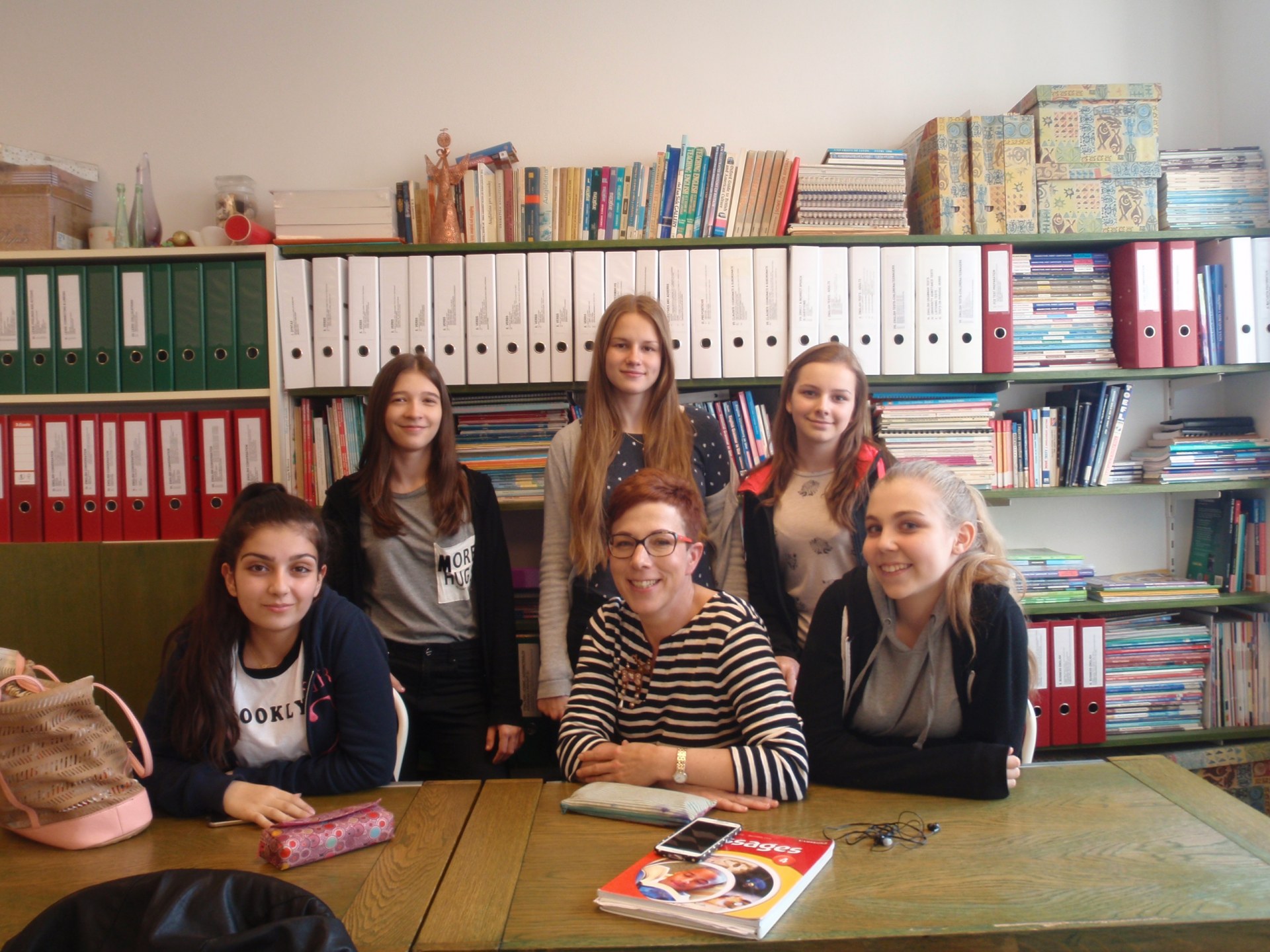
Our school has an atmosphere that is quite unique, characterised by a specific and family-like school spirit. We know all our students personally by name and frequently even their whole family story. At our school, we teach adults in public courses or in their companies, as well as children, so we often teach both parents and their children and get to know the whole family. We make every effort to maintain high-quality learning in a friendly, modern and informal environment.
Our team
Since its opening, the school has collaborated with highly qualified Slovak and foreign lecturers from English-speaking countries. For our teachers, English is not only a job but also a passion. Since founding our language centre, several lecturers from the United States, Canada, England, Scotland, Northern Ireland, and Australia have taught at our school. Through a combination of learning with Slovak and foreign lecturers, starting at beginner level up to full conversation classes with a native speaker at upper-intermediate or advanced level, a mastery of all essential language skills can be achieved really fast. No doubt, having a foreign lecturer at a school greatly benefits both students and other Slovak language teachers. A native speaker can motivate them to work hard on their skills, self-presentation, and active use of the language.
For the academic year 2026/2027, the following teachers will be at students’ disposal at our language centre:
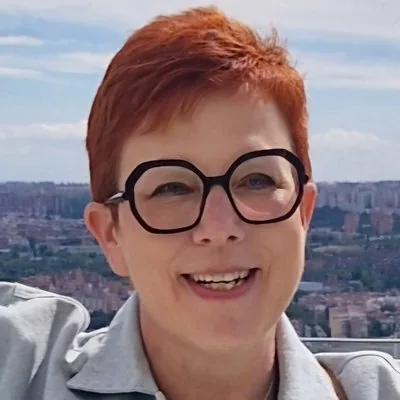
Mgr. Ing. Gabriela Troskóová
founder and manager of the language centre
Position:
senior teacher of Slovak nationality, working full-time
Education:
graduate of a Bachelor’s degree programme at the Faculty of Arts, University of Prešov in Prešov – majoring in English Language
graduate of a Master’s degree programme at the Faculty of Arts, University of Prešov in Prešov – majoring in Modern Non-Slavic Philology, specialising in English Language and Literature
graduate of a supplementary postgraduate specialisation programme in Translation – Specialist translation: Law, Economics, Engineering
graduate of the Faculty of Civil Engineering at the Technical University of Košice – specialising in Building Construction
holder of two Cambridge certificates: C1 and C2
Work experience:
Gabriela has been working in the education sector at various levels since 1985. She has many years’ experience teaching children, young people and adults aged between 8 and 60 and over. Her extensive teaching experience at university, secondary schools, and primary schools reflects her all-round expertise and inspires confidence in her qualifications and commitment to high-quality education.
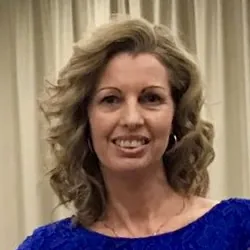
Georgina Williams
senior teacher, currently working online only
Position:
foreign teacher of British nationality
Education:
secondary school graduate from Sheffield, UK, who pursued an intensive professional figure skating career with Holiday on Ice, an international professional ice show
Work experience:
Georgina spent many years as a figure skater with Holiday on Ice, working with people of various nationalities in Mexico, Central and South America, South Africa, and across Europe; she has lived and taught English in Košice since 2011 and at our language centre since 2012.

Heather Dawn Zavaďák-Wyche
senior teacher, currently on maternity leave and working part-time
Position:
foreign teacher of British nationality
Education:
graduate of a Bachelor’s degree programme at the University of Bolton in the UK – English Language, specialising in literature
graduate of a Master’s degree programme at the University of Huddersfield in the UK – Continuing Education and Training, specialising in literacy
holder of a TOEFL certificate of proficiency in teaching English as a second language
Work experience:
An exchange programme at the University of Prešov as part of the ERASMUS programme inspired Heather to live abroad and travel. After spending a year in Prague, Czech Republic, she moved to Košice in 2009 and has been teaching at our language school since 2013, with a brief break.

Adam Richard Rust
junior teacher, works part-time
Position:
foreign teacher of British nationality
Education:
primarily educated in Manchester, England, followed by completing secondary education in Cork, Ireland
graduate of further academic studies in Computer Science at the University of Limerick, Furniture Making and Restoration at Saint John’s College in Cork, and Computer and Office Skills at Bishopstown in Cork
holder of a TOEFL certificate of competence to teach English as a second language
Work experience:
Before taking up the position of English teacher at our language school, Adam volunteered in sexual health education through the Red Ribbon project. He supported the LGBT+ community through Rainbow Support Services, both based in Limerick, Ireland. He has also worked in the agricultural sector, customer service, retail, and hospitality and catering. In 2022, he moved to Košice and has been teaching at our language school since 2023.

Jayant Kumar
junior teacher, medical student, currently working online only
Position:
foreign teacher of British nationality
Education:
secondary school graduate from Birmingham in the UK, currently full-time fifth-year medical student at the Faculty of Medicine, UPJŠ in Košice
Work experience:
Seemingly inexperienced as a teacher, but as a well-travelled young man who enjoys travelling, sport, films, reading, and writing, Jay has quickly formed close, spontaneous relationships with students, particularly with children and young people at the language school. In addition to his own country, he has lived and studied in Bulgaria and the Czech Republic. He has been teaching with us since 2023.
He who asks is a fool for five minutes, but he who does not ask
remains a fool forever.
Mark Twain

Photo Gallery